Physical Therapy
Rebuilds strength, balance, walking, transfers and endurance for safer movement.
- gait and transfer training
- balance and fall-risk awareness
- stairs or wheelchair mobility when appropriate
- equipment discussion
Physical, occupational and speech therapy, skilled nursing support and practical planning for the next step.
Short-term rehabilitation begins with the resident's current condition, physician orders, medications, therapy tolerance, safety considerations and family goals. The care team coordinates nursing support with therapy so progress is connected to daily routines, not isolated exercises.
Private accommodations and the seven-acre campus setting give families a calmer place to ask questions, plan next steps and stay close to the recovery process.
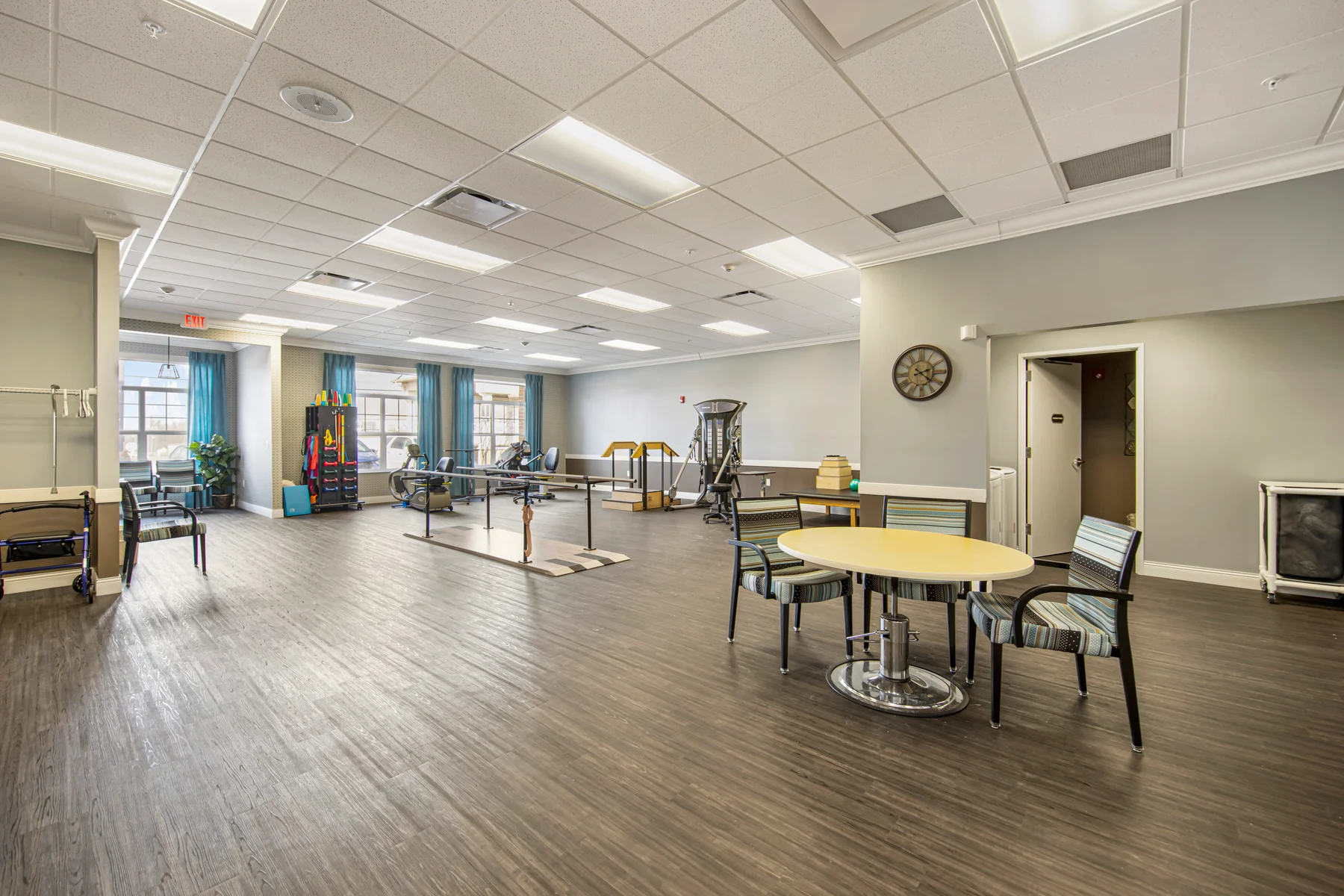
The therapy plan may include physical, occupational and speech therapy, depending on what the resident needs after hospitalization.
Rebuilds strength, balance, walking, transfers and endurance for safer movement.
Practices daily-living skills that shape independence, comfort and safety.
Supports communication, cognition, swallowing and safe mealtime strategies when those needs are present.
The rehabilitation gym includes practical training environments for kitchen, bathroom and laundry routines. These spaces help residents rehearse the tasks that often decide whether a return home feels manageable.
When appropriate, discharge planning may include a home evaluation, equipment suggestions, caregiver education, follow-up coordination and discussion of modifications that could support a safer transition.
Availability depends on physician orders, clinical review, staffing, equipment and the resident's current needs.
Cardiac rehabilitation focuses on tolerance, pacing, symptom awareness, medication routines and practical education after heart-related illness, surgery or hospitalization.
The plan may include coordination among physicians, nurses, therapists, nutrition support and emotional support professionals, depending on the resident's needs.
Orthopedic rehabilitation helps residents practice safer movement after joint replacement, fracture, spine procedures or other bone and joint conditions.
Therapy can address transfers, walking, stairs when appropriate, range of motion, strengthening, pain-aware movement and physician-ordered precautions.
Post-surgical rehabilitation connects therapy progress with nursing oversight, medication routines, incision or wound needs, nutrition and follow-up instructions.
The team reviews hospital directions so activity goals respect precautions while still rebuilding function.
Neuromuscular therapy supports residents affected by weakness, coordination changes, neurological conditions or reduced endurance.
The work may involve physical, occupational and speech therapy when movement, daily routines, swallowing, communication or cognition are affected.
Respiratory therapy may be part of the rehabilitation plan when breathing support, oxygen needs, endurance or ordered respiratory treatments affect recovery.
The team coordinates respiratory considerations with therapy participation, rest, meals, nursing communication and physician orders.
IV therapy requires review of medication, frequency, duration, line care, pharmacy coordination and monitoring expectations.
When IV therapy is part of rehabilitation, nursing routines are coordinated with meals, therapy, rest and follow-up care.
Transitional care helps bridge the move from hospital to rehabilitation and then to the next setting.
The work is practical: records, medications, family questions, therapy goals, transportation, equipment and what the first days after discharge should look like.
Wound care may include ordered treatments, monitoring, nutrition awareness, pressure relief, skin checks and communication with physicians or specialists.
For residents also receiving therapy, wound needs are considered alongside mobility, comfort, positioning and daily routines.